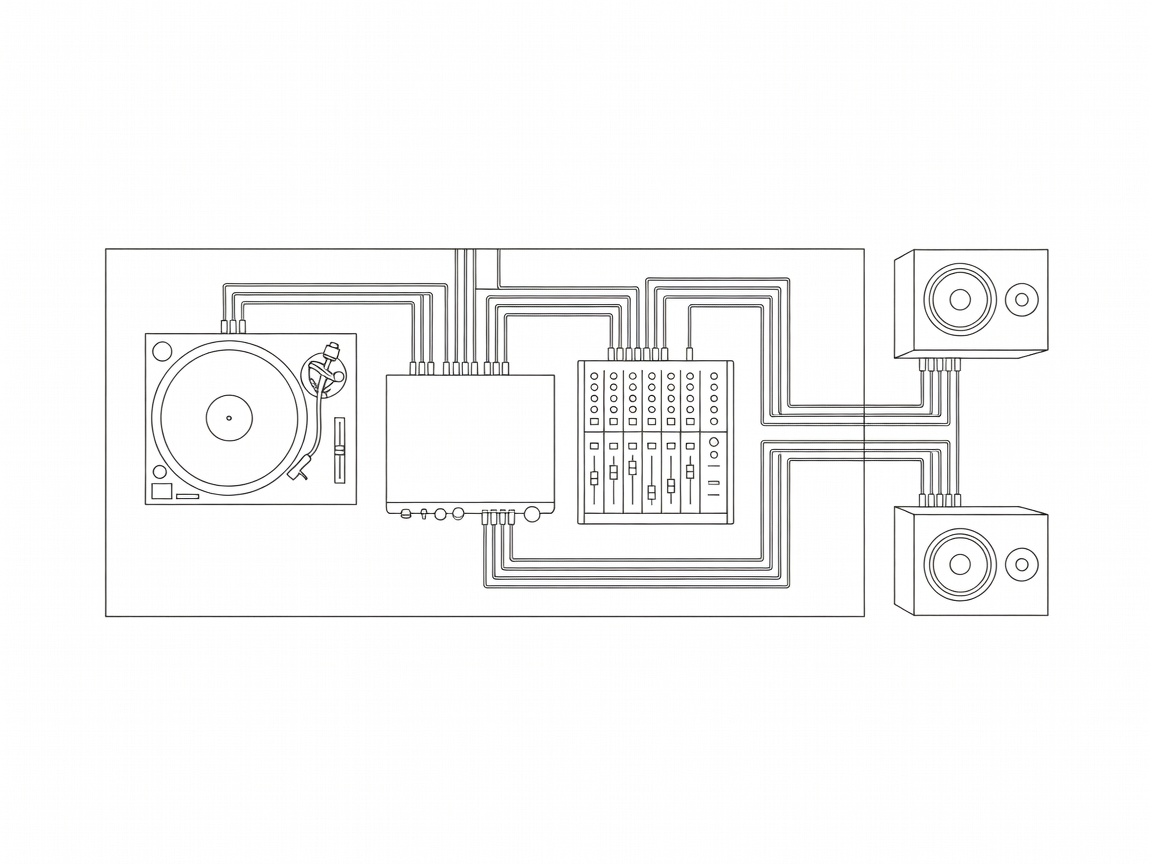
Flawless track selection is entirely irrelevant if the playback hardware fails or the venue acoustics garble the output. Event coordinators must manage hardware infrastructure with the same rigor applied to catering or guest lists. The sound check is a mandatory operational phase, executed strictly before the first attendee breaches the doors.
Speaker Placement and Angle Geometry
The physical positioning of loudspeakers dictates the clarity of the audio. Never place speakers flat on the ground; high frequencies are highly directional and will be absorbed entirely by the legs and torsos of the attendees. Main speakers must be elevated on secure tripod stands, positioning the tweeters slightly above the head height of a standing adult (approximately 6 to 6.5 feet).
Avoid aiming speakers directly at flat, hard surfaces like glass windows or unadorned concrete walls. This creates intense acoustic reflections, resulting in a harsh, echoing environment that induces headaches. Instead, angle the speakers slightly inward toward the center of the dance floor or gathering area, ensuring the sound waves are directed at the bodies of the attendees, which act as natural acoustic dampeners.
Cable Management and Power Integrity
Loose cabling is a severe liability. Audio and power cables must be routed along the perimeter of the room, secured firmly with high-visibility gaffer tape. Never run cables across a thoroughfare or doorway unless covered by a heavy-duty rubber cable ramp. Tape down all slack near the DJ booth or media desk to prevent accidental disconnections during the event.
Verify the power load. Audio amplifiers draw significant current, particularly when reproducing bass-heavy tracks during the dance phase. Ensure the audio system is plugged into a dedicated circuit, entirely separate from catering equipment (such as coffee urns or chafing dish heaters) and heavy lighting rigs. A blown fuse midway through the evening is a catastrophic failure of logistics.
The Empty Room vs. The Full Room
An acoustic anomaly every coordinator must understand is the difference between an empty venue and an occupied one. During a 3:00 PM sound check, the room will sound bright, loud, and potentially echoing. When 150 guests enter the space at 7:00 PM, their bodies will absorb a massive percentage of the sound energy, particularly mid and high frequencies.
You must calibrate the baseline volume during sound check roughly 15% to 20% louder than you think is necessary for the arrival phase. Once the room reaches 70% capacity, monitor the output from the back corner of the room. Assign an operator to dynamically ride the volume fader as the density of the crowd fluctuates throughout the evening.
Microphone Protocols
If speeches or announcements are scheduled, the microphone must be tested against the live speaker placement. Stand in the exact location the speaker will stand and address the room at normal volume. Ensure the microphone is not positioned directly in front of the main speakers to eliminate the risk of a feedback loop—the high-pitched squeal caused when a microphone picks up its own amplified signal. Mark the safe standing zone with a discrete piece of tape on the floor.